OSCE Exam Preparation Australia 2026: How to Pass Your Clinical Assessment
Everything you need to know about preparing for the OSCE clinical examination for Australian nursing registration. Covers all 10 station types, the 7 NMBA standards, exam logistics, and how to practise from anywhere with AI voice simulation.
The GdayNurse Team
31 March 2026
8 min read
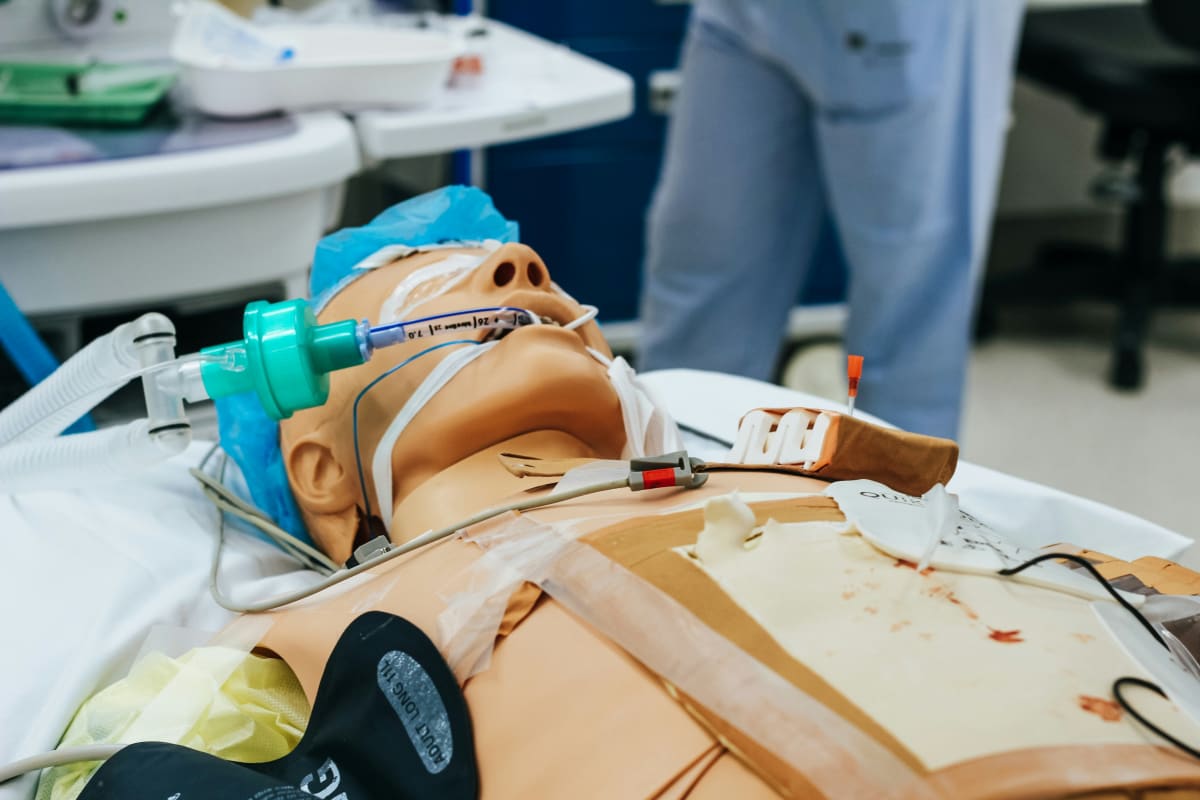
OSCE Exam Preparation Australia 2026: How to Pass Your Clinical Assessment
The OSCE (Objective Structured Clinical Examination) is the clinical component of Australia's Outcome-Based Assessment pathway. At $4,000 AUD per sitting, it is the most expensive exam you will take — and the one most candidates find hardest to prepare for.
Unlike the NCLEX-RN which you can take at any Pearson VUE centre worldwide, the OSCE is only held in Adelaide and Melbourne. You walk into a room, face a standardised patient (actor), and have exactly 8 minutes to demonstrate your clinical competence.
This guide covers everything: the format, what examiners look for, all 10 station types, and how to prepare — including options that do not require travelling to Australia.
What Is the OSCE?
Three logistics rules that catch candidates out, before you get to the clinical content:
- Withdrawing. If you cannot attend your allocated date, email the IQNM Exams Team at least five full business days beforehand. Weekends and Australian public holidays do not count.
- Visas. Ahpra does not give visa advice. Once you have paid the OSCE fee and are based overseas, the IQNM Exams Team issues a letter you can include in your visa application — and you must send them a copy of your visa approval letter before you will be invited to accept an exam date. That sequencing catches people out: no approved visa, no date.
- What to study from. NMBA directs candidates to the relevant OSCE Candidate Handbook and the NMBA standards for practice. Those two documents are your source of truth for what is assessed — rehearse against them, not against a summary of them.
Verified 25 August 2026 against the NMBA IQNM OSCE examination page.
The OSCE is a practical clinical examination delivered by NMBA-approved providers (Adelaide Health Simulation and RANZCOG ALEC Melbourne) on behalf of the Nursing and Midwifery Board of Australia (NMBA). It assesses whether you can practise safely as a registered nurse in the Australian healthcare system. (Note: ANMAC handles a separate migration skills assessment — it does not administer the OSCE.)
Key facts:
- Cost: $4,000 AUD per sitting
- Location: Adelaide and Melbourne only
- Frequency: Monthly exam dates (limited spots)
- Duration: Approximately 2 hours total
- Stations: 10 clinical scenarios
- Per station: 2 minutes reading time + 8 minutes performance
- Assessment: Scored against 7 NMBA Registered Nurse Standards for Practice
- Result: Competent or Not Yet Competent (pass/fail)
The 7 NMBA Standards for Practice
Every OSCE station is assessed against these standards. You do not need to demonstrate all 7 in every station — each station targets specific standards based on the clinical scenario.
| Standard | Focus | What Examiners Look For |
|---|---|---|
| S1: Thinks Critically | Clinical reasoning | Do you identify relevant cues? Do you prioritise correctly? |
| S2: Therapeutic Relationships | Communication | Do you introduce yourself? Use active listening? Show empathy? |
| S3: Maintains Capability | Professional practice | Do you follow infection control? Maintain privacy? Document accurately? |
| S4: Comprehensive Assessments | Assessment skills | Do you use systematic assessment? Use validated tools (SOCRATES, NEWS2)? |
| S5: Plans for Practice | Care planning | Do you develop goals? Involve the patient? Plan realistic interventions? |
| S6: Safe Quality Practice | Clinical skills | Do you administer medications safely? Use correct technique? Respond to emergencies? |
| S7: Evaluates Outcomes | Evaluation | Do you reassess after interventions? Modify the plan? Communicate outcomes? |
Critical behaviours that cause automatic failure:
- Breaking sterile technique without recognising the error
- Administering medication without checking the 5 Rights
- Failing to introduce yourself or verify patient identity
- Ignoring a deteriorating patient
- Breaching patient confidentiality
The 10 OSCE Station Types
1. Patient Assessment (Most Common)
Scenario: Assess a post-operative patient, triage a chest pain presentation, or perform a falls risk assessment. Key skills: Systematic head-to-toe assessment, vital signs interpretation, use of assessment tools (GCS, NEWS2, SOCRATES pain assessment), recognising clinical deterioration. Common stations: Post-op pain assessment, chest pain triage, neurological assessment, respiratory assessment, mental health assessment.
2. Medication Administration
Scenario: Administer insulin subcutaneously, set up an IV antibiotic, or manage a PRN opioid request. Key skills: 5 Rights of medication administration, checking allergies, calculating doses, recognising contraindications, patient education about medications. Common stations: Subcutaneous insulin injection, IV antibiotic administration, oral medication round, IM injection, PRN opioid administration.
3. Clinical Procedure
Scenario: Perform wound assessment and dressing, manage a urinary catheter, or check blood glucose. Key skills: Aseptic technique, equipment preparation, patient consent, procedural competence, documentation. Common stations: Wound assessment, urinary catheter care, blood glucose monitoring, nasogastric tube management, venipuncture.
4. Communication
Scenario: Perform an ISBAR clinical handover, break bad news, or communicate through an interpreter. Key skills: ISBAR framework, active listening, empathy, professional boundaries, cultural sensitivity, conflict resolution. Common stations: ISBAR handover, informed consent discussion, breaking bad news, working with interpreters, conflict resolution with colleagues.
5. Emergency Response
Scenario: Respond to a deteriorating patient, manage anaphylaxis, or handle a hypoglycaemia emergency. Key skills: DRSABCD, calling for help, emergency medication administration, escalation protocols, BLS/ALS. Common stations: Deteriorating patient, anaphylaxis response, hypoglycaemia emergency, post-operative haemorrhage, basic life support.
6. Patient Education
Scenario: Teach a patient about heart failure self-management, diabetes care, or asthma action plan. Key skills: Health literacy assessment, teach-back method, written resources, cultural considerations, discharge planning. Common stations: Heart failure discharge education, diabetes self-management, post-operative hip education, asthma action plan.
7. Documentation (Unmanned Station)
Scenario: Complete nursing documentation for a clinical scenario. Key skills: Accurate clinical documentation, using standardised forms, objective language, completeness.
8. Vital Signs (Unmanned Station)
Scenario: Interpret vital signs data and identify clinical deterioration. Key skills: Normal ranges, recognising abnormalities, NEWS2 scoring, escalation triggers.
9. Infection Control
Scenario: Demonstrate standard precautions or manage a patient requiring transmission-based precautions. Key skills: Hand hygiene (5 moments), PPE donning and doffing, standard vs transmission-based precautions, waste management.
10. Wound Care
Scenario: Assess and manage a wound, including selecting appropriate dressings. Key skills: Wound assessment (size, depth, exudate, edges), wound classification, dressing selection, aseptic technique, documentation.
How to Prepare for the OSCE
Traditional Preparation Options
Face-to-face courses in Australia:
- NETA: $2,500 AUD (All Inclusive with unlimited sessions)
- IHM Australia: $2,000 AUD (4-week on-campus)
- Edulogix: $2,700 AUD (face-to-face with lab access)
- NAI: Contact for pricing (labs in Sydney, Melbourne, Adelaide, Brisbane)
Pros: Hands-on practice with real equipment, face-to-face feedback, group learning. Cons: Expensive ($2,000-2,700), requires travel to Australia, fixed schedule, limited practice repetitions.
Online Preparation
GdayNurse OSCE Simulation:
- 30 interactive stations covering all 10 station types
- Real-time AI voice interaction — speak to a simulated patient
- Scored against all 7 NMBA Standards
- Full mock exam mode (10 stations) and mini exam mode (4 stations)
- Practise from Manila, Delhi, Kathmandu, or anywhere with internet
- From $397 AUD (32 sessions) — view pricing
- Try 2 free stations
Recommended Study Timeline
| Period | Activity |
|---|---|
| 3-6 months before | Study NMBA Standards, review clinical procedures, listen to OSCE audio lectures |
| 2-3 months before | Start practising stations — aim for 3-4 per week. Focus on communication and assessment skills |
| 1-2 months before | Full mock exams. Identify weak station types and practise them repeatedly |
| 2 weeks before | Light review. Focus on your opening sequence (introduction, hand hygiene, patient ID). Rest well |
| Day before | No practice. Prepare documents, plan travel, get 8 hours sleep |
OSCE Day: What to Expect
Before the Exam
- Arrive 30 minutes before your scheduled time
- Bring valid photo ID (passport)
- You will receive a candidate number and orientation
- No phones, notes, or study materials allowed inside
During Each Station
- Reading time (2 minutes): You stand outside the station and read the "door note" describing the scenario, patient details, and your task. Read it twice — note the patient's name, condition, and what you are asked to do.
- Performance time (8 minutes): A bell signals entry. Introduce yourself, verify patient identity, and begin your task. The examiner observes silently. The standardised patient responds naturally to your actions.
- Station end: A bell signals time. Stop immediately, thank the patient, and move to the next station.
Manned vs Unmanned Stations
- Manned stations have a standardised patient (actor) and/or an examiner present
- Unmanned stations may involve documentation tasks, calculation exercises, or interpretation of clinical data
- You typically get a mix of both in your 10-station circuit
Common Mistakes That Cost Marks
-
Not introducing yourself properly: "Hello, my name is [Name], I'm the registered nurse caring for you today. Can I confirm your full name and date of birth?" Do this at EVERY manned station.
-
Skipping hand hygiene: Perform hand hygiene when entering and leaving every station. Use the alcohol-based hand rub provided. Examiners watch for this.
-
Talking AT the patient instead of WITH them: Use open-ended questions. "Tell me about your pain" is better than "Is your pain a 5 out of 10?"
-
Rushing through the station: 8 minutes is longer than you think. Slow down, be methodical, and demonstrate your reasoning. Saying "I'm checking your blood pressure because I want to monitor for hypotension after your surgery" shows clinical reasoning.
-
Forgetting ISBAR for handover: If the station involves handing over to another nurse or doctor, use ISBAR every time: Identify, Situation, Background, Assessment, Recommendation.
-
Not checking allergies before medication administration: Even if the scenario seems straightforward, always ask "Do you have any allergies?" and check the medication chart.
-
Not evaluating after an intervention: After giving pain relief, say "I'll come back in 30 minutes to reassess your pain and check the medication has been effective." This demonstrates Standard 7 (Evaluates Outcomes).
The First 30 Seconds Matter Most
Research on OSCE performance shows that candidates who start well tend to perform well throughout. Your opening sequence should be automatic:
- Knock on the door (or indicate entry)
- "Good morning/afternoon, my name is [Name], I'm the registered nurse caring for you today"
- Hand hygiene
- "Can I please confirm your full name and date of birth?" (check against wristband if available)
- "I understand you [reference the clinical scenario from the door note]. Is that correct?"
- "I'd like to [state what you plan to do]. Is that okay with you?"
Practise this sequence until it is automatic. Listen to our OSCE First 30 Seconds audio lecture for a detailed walkthrough.
After the OSCE
- Results are typically available within 4-6 weeks
- You receive a detailed breakdown by NMBA Standard for each station
- If you pass: proceed to AHPRA registration application
- If you do not pass: you can re-sit at the next available date ($4,000 per re-sit)
- There is no limit on re-sits, but each attempt costs full price
OSCE vs NCLEX-RN: Key Differences
| Feature | NCLEX-RN | OSCE |
|---|---|---|
| Type | Written (computer) | Clinical (in-person) |
| Location | Worldwide (Pearson VUE) | Adelaide/Melbourne only |
| Cost | $530 AUD | $4,000 AUD |
| Duration | Up to 5 hours | ~2 hours |
| Format | 85-150 adaptive questions | 10 clinical stations |
| Assessment | Computer scoring | Human examiners |
| Preparation | Question banks, audio lectures | Clinical practice, simulation |
Most candidates take the NCLEX-RN first, then prepare for the OSCE. Read the NCLEX-RN complete guide.
Start Your OSCE Preparation
- Try 2 free OSCE stations — experience the AI voice simulation
- Listen to 13 OSCE audio lectures — step-by-step station walkthroughs
- View OSCE pricing — from $397 for 32 sessions
- Read the OSCE assessment guide — free comprehensive guide
- Bundle NCLEX + OSCE and save 10%
OSCE format and requirements are set by the NMBA and delivered through approved providers (Adelaide Health Simulation and RANZCOG ALEC Melbourne). Verify exam dates and fees at the NMBA OSCE page. Last reviewed by GdayNurse: 6 May 2026.
Frequently Asked Questions
How much does the OSCE cost in Australia?
The OSCE costs $4,000 AUD per sitting. If you fail, each re-sit costs the full $4,000 again. The exam is held monthly in Adelaide and Melbourne only.
How many OSCE stations are there?
The OSCE consists of 10 clinical stations. Each station has 2 minutes reading time and 8 minutes performance time. Stations include a mix of manned (with actors) and unmanned (documentation/interpretation) scenarios.
What is the OSCE pass rate for international nurses?
ANMAC does not publish official pass rates. Anecdotal reports suggest first-time pass rates of 50-70% for well-prepared candidates. Thorough preparation significantly improves your chances.
Can I prepare for the OSCE online?
Yes. While traditional face-to-face courses cost $2,000-2,700 and require travel to Australia, online platforms like GdayNurse offer AI-powered voice simulation with 30 interactive stations from $397. You can practise from anywhere in the world.
What are the 7 NMBA Standards assessed in the OSCE?
The 7 standards are: 1) Thinks Critically, 2) Therapeutic Relationships, 3) Maintains Capability for Practice, 4) Comprehensive Assessments, 5) Plans for Practice, 6) Safe Quality Practice, 7) Evaluates Outcomes. Each station targets specific standards.
How should I introduce myself at an OSCE station?
Say: "Good morning/afternoon, my name is [Name], I am the registered nurse caring for you today. Can I confirm your full name and date of birth?" Then state what you plan to do and obtain verbal consent. Do this at every manned station.
How long should I study for the OSCE?
Most successful candidates prepare for 2-4 months. Start with theory (NMBA Standards, clinical procedures) and gradually increase practical station practice to 3-4 stations per week in the final months.
Do I need to take the NCLEX-RN before the OSCE?
Yes, Stream B nurses must pass the NCLEX-RN before they can register for the OSCE. The recommended pathway is: ANMAC assessment → NCLEX-RN → OSCE → AHPRA registration.
Related Articles

OSCE Station Examples for Nursing in Australia: What to Expect at Each Station
Real examples of what you will face at each of the 10 OSCE station types for Australian nursing registration. Includes sample door notes, expected actions, and common mistakes for each station type.
5 min read

AHPRA Nursing Registration Fees 2026: Complete Cost Breakdown for International Nurses
Complete breakdown of every fee you will pay for nursing registration in Australia in 2026. From ANMAC skills assessment to AHPRA annual registration — with money-saving tips and a downloadable budget planner.
14 min read